
An effective compliance plan typically includes five to seven core components, depending on the regulatory framework and industry requirements. Understanding how many components are included in an effective compliance plan, and how to operationalize each one, remains critical for governance leaders navigating today's complex regulatory environment.
Organizations face an expanding web of requirements spanning data privacy, cybersecurity disclosure, anti-corruption and industry-specific mandates. Yet many still rely on fragmented, manual processes that struggle to keep pace.
According to Diligent's Transaction Readiness Report, 60% of organizations report their governance, risk and compliance systems remain completely or partially siloed, with just 4% achieving full platform integration. This fragmentation creates blind spots that surface during audits, regulatory examinations and due diligence processes.
This comprehensive guide explains how to build and operationalize effective compliance plans by covering:
A compliance plan is a structured system of policies, procedures, processes and controls designed to prevent, detect and respond to legal and regulatory violations. Effective plans go beyond documentation to create operational capabilities that actively manage compliance risk across the organization.
The Department of Justice, Office of Inspector General and industry regulators have established frameworks outlining essential compliance plan components. While the specific number varies across frameworks — some emphasize five elements, others seven or more — most regulatory guidance addresses these core pillars: governance and leadership, risk assessment, standards and controls, training and communication, monitoring and auditing, reporting mechanisms and response protocols.
Regulatory expectations have intensified significantly across multiple dimensions. The SEC's cybersecurity disclosure rules now require material incident reporting within four business days through Form 8-K. Additionally, the EU's Digital Operational Resilience Act (DORA) mandates continuous monitoring and third-party risk management for financial institutions.
Meanwhile, state-level regulations like California's data privacy laws create overlapping compliance obligations for organizations operating across jurisdictions.
These pressures demand more than traditional check-the-box approaches. "Compliance with regulations always comes first," says Heindrek Allen, ESG Manager at Magnit Global. "We look at new regulations coming out and say, 'Are we compliant? What do we need to do to be compliant?'"
Beyond regulatory requirements, compliance plan effectiveness increasingly influences stakeholder confidence. Investors, customers and business partners evaluate compliance maturity during transactions, partnerships and ongoing relationships. Organizations that demonstrate structured compliance capabilities gain competitive advantages, while those with visible gaps face heightened scrutiny.
Before diving into implementation, it's important to understand the foundational components that regulatory frameworks expect. Most authorities emphasize seven core elements that comprehensive compliance plans should address.
1. Governance and leadership oversight: Board and executive commitment to compliance, including designated compliance officers, committee structures and regular reporting mechanisms.
2. Risk assessment: Systematic identification and evaluation of compliance risks across operations, geographies and regulatory domains.
3. Standards and controls: Documented policies, procedures and internal controls that address identified risks and regulatory requirements.
4. Training and communication: Education programs that ensure employees understand compliance expectations and know how to identify and escalate potential issues.
5. Monitoring and auditing: Ongoing board oversight activities that verify control effectiveness and detect potential violations before they become significant issues.
6. Reporting and response: Confidential reporting channels and incident response protocols that enable early detection and appropriate escalation.
7. Enforcement and continuous improvement: Accountability mechanisms that reinforce compliance expectations while driving plan enhancement over time.
The five operational stages that follow provide a practical framework for implementing these components across organizations of any size.
Building effective compliance infrastructure requires systematic approaches that connect measurement, action, accountability, process optimization and continuous improvement.
Measuring against regulatory requirements and internal standards provides the baseline for identifying gaps, prioritizing resources and tracking improvement over time. Effective measurement requires comprehensive risk assessment that evaluates your regulatory universe, industry obligations and geographic exposure.
The challenge is that compliance obligations never stand still. Organizations must monitor performance continuously rather than relying on periodic snapshots — tracking policy attestation rates, control testing results, incident detection metrics and remediation timelines on an ongoing basis.
Measurement provides value only when findings drive concrete improvements. Once you understand your compliance posture, translate that intelligence into implementation plans with clear ownership and timelines.
The key is building feedback loops that connect measurement to action to measurement again. Each improvement initiative should have defined success metrics that demonstrate progress while identifying areas requiring additional attention.
Effective compliance plans translate risk intelligence into business language that resonates with different stakeholders, connecting compliance requirements directly to operational objectives and strategic priorities.
Meeting regulatory obligations cannot remain solely the compliance team's responsibility. Effective compliance plans establish clear accountability across all organizational levels:
"There should be a direct, consistent line of communication from the Chief Compliance Officer (CCO) or General Counsel (GC) to the board," says Pav Gill, CEO of Confide. "A strong GC understands that their ultimate responsibility is to the board, but the board must also recognize this dynamic."
Compliance often becomes synonymous with inefficient manual processes. Streamlining your approach makes it more likely that people will follow required procedures consistently while freeing capacity for strategic improvements.
Effective process optimization focuses on several key areas:
The goal is making compliance easier to achieve, not just easier to document. When compliance requirements integrate naturally into daily workflows, adoption rates increase and outcomes improve.
Regulatory landscapes evolve continuously, and the right compliance plan today may need adjustment tomorrow. Effective plans institutionalize regular review cycles that reassess regulatory requirements, evaluate control effectiveness and update plan components accordingly.
Organizations should maintain audit-ready documentation that demonstrates how they identified, assessed and responded to regulatory changes. This documentation becomes essential during audits, regulatory examinations and due diligence processes.
"Reporting regulations are everywhere. And they're going to get faster and more stringent," says Heindrek Allen, ESG Manager at Magnit Global. "Getting the right people involved, building the right knowledge base, takes time."
Discover how AI-powered compliance platforms help organizations streamline regulatory monitoring, automate policy management and build audit-ready documentation.

For organizations managing complex compliance requirements, AI-powered platforms, like Diligent, address the manual monitoring and process constraints that limit traditional approaches.
Diligent Regulatory Compliance Management centralizes compliance data and monitors regulatory changes across multiple jurisdictions, delivering automated alerts and real-time compliance monitoring.
The AI-powered compliance assistant analyzes regulatory updates, identifies key changes and suggests mitigating controls. Built-in reporting capabilities help demonstrate compliance to regulators and capture cross-department activities, giving organizations the documentation they need for audits and examinations.
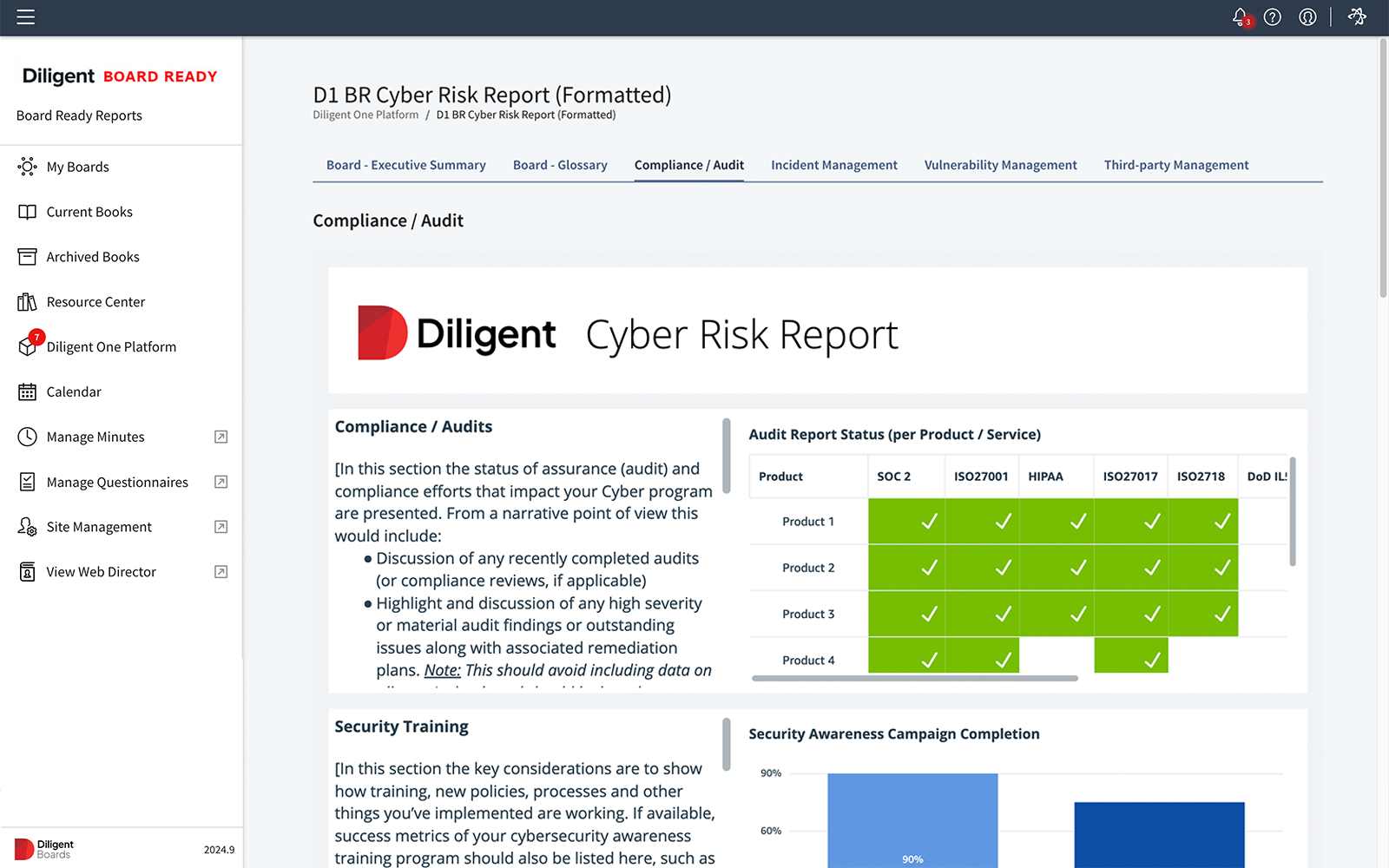
Building on the above, Diligent Policy Manager simplifies policy governance from creation to compliance. Customizable workflows route policies through proper approval chains while automated attestations reduce manual follow-up and ensure employees acknowledge updated requirements.
Advanced analytics provide interactive visualizations and customizable reports that track attestation progress and identify gaps before they become violations.
Diligent IT Compliance accelerates certifications that enterprise customers require. Supporting 75+ frameworks, including SOC 2, ISO 27001, NIST and FedRAMP, the platform provides always-on compliance monitoring that tracks user access violations and segregation of duties in real time.
AI control suggestions help teams implement requirements quickly, while board-ready dashboards give leadership visibility into compliance status across the organization.
"AI is the single most transformative opportunity for legal, finance, and compliance teams in the next decade," says Brian Stafford, CEO at Diligent. "This isn't about replacing people, it's about amplifying them."
Building an effective compliance plan comes down to the fundamentals: measure your current state, turn insights into action, establish clear accountability, streamline processes and review regularly. The right technology accelerates each stage while providing audit-ready documentation.
Discover how Diligent helps organizations build compliance plans that scale with regulatory complexity. Request a demo to see the platform in action.
Effective compliance plans typically include five to seven core components, depending on the regulatory framework applied. The DOJ emphasizes seven elements: governance and leadership, risk assessment, policies and procedures, training and communication, monitoring and auditing, reporting mechanisms, and enforcement and response.
Some industry frameworks consolidate these into five elements focused on operational implementation.
Plan effectiveness measurement combines outcome metrics (policy attestation rates, control testing results, incident resolution times) with operational metrics (time to identify regulatory changes, audit preparation efficiency, stakeholder satisfaction). Organizations should establish baselines and track trends over time.
Annual comprehensive reviews represent a minimum standard, with more frequent assessments for high-risk areas or rapidly evolving regulatory domains. Organizations should implement continuous monitoring for regulatory changes and trigger reviews when significant new requirements emerge.
Effective compliance requires organization-wide accountability. While compliance professionals establish plans and monitor effectiveness, every employee plays a role through their daily activities. Leadership must model compliant behavior, and clear role definitions ensure everyone understands their specific obligations.
If you want expert support putting these components into practice, Diligent’s Compliance Advisory Services provide structured assessments and practical guidance tailored to your organization. And if you're ready to see how Diligent's AI-powered compliance solutions can transform your operations, request a demo today.