In this episode of the Corporate Director Podcast, host Dottie Schindlinger talks with workplace culture expert Bree Groff, author of Today Was Fun: A Book About Work (Seriously). Bree makes the case that valuing “human days” is a strategic lever for performance, retention, and risk oversight, and why directors should care. She shares early warning signs like the disappearance of “orange flags”—and practical first moves for boards and CEOs: acknowledge the problem openly, use human language, and target daily “reverse pet peeves” to lift culture.
Also in this episode:
Intro/Outro: Welcome to the Corporate Director Podcast, where we discuss the experiences and ideas behind what's working in corporate board governance in our digital tech field world. Here you'll discover new insights from corporate leaders and governance researchers with compelling stories about corporate governance, strategy, board culture, risk management, digital transformation.
Dottie Schindlinger: Hi everybody and welcome back to the Corporate Director Podcast, the Voice of Modern Governance. My name is Dottie Schindlinger, executive Director of The Diligent Institute, and I'm joined once again by my fantabulous co-host Meghan Day strategy leader here at Diligent.
Meghan Day: but I'm staying warm by all of the exciting stuff happening here at Diligent Corporation.
Dottie Schindlinger: Oh, that's a great segue, Meghan. Well done. Yeah. Honestly, it's been an exciting time here in the Diligent HQ. So do you wanna share the happy news with our audience?
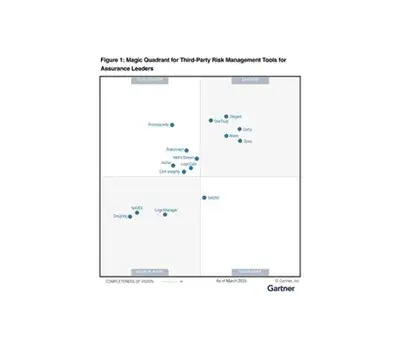
Meghan Day: Yeah, I mean, we have a ton of stuff going on and we'll get into why that actually matters to our listeners here in a minute. But I am super stoked because we have been named a leader in the recently released Gartner Magic Quadrant report that covers governance, risk and compliance. And this is huge for us, and I think a true testament to how we've been working to embed AI innovation directly into our platform.
Dottie Schindlinger: I think it's exciting too, Meghan, because you know, I wonder if a lot of our listeners are like, wait a minute, you guys are governance, risk and compliance. Aren't you just a board platform? Like, and that is true, like Diligent has really grown and expanded over the last five, six years to focus on providing kind of end-to-end service across governance, risk, audit, compliance, ethics, you know, kind of the whole gamut of things.
It’s kind of nice to get a little attaboy for that work. You know, it's nice to see us getting some plotted for all this hard work.
Meghan Day: Absolutely. And that includes some great work that we're doing on the board side of the house and includes our govern ai, which helps build board presentations.
It helps you scan for risky legal language or things that maybe shouldn't be in your board deck, and it helps you generate minutes at the click. Of a button. So it's really cool. And we really believe it's moving the needle for organizations around the world.
Dottie Schindlinger: That's awesome. And so one other thing just to mention, often Gartner charges a fair amount of money for their reports.
This one you can get for free. There's a complimentary version available. We'll put a link to that on the podcast page so you can find it easily. And, uh, and hopefully you'll enjoy giving it a read. If you don't care, please read it anyway.
Meghan Day: Well, we're excited about it and I feel like it's a good segue too.
Dottie, to all of your travels this fall, you have been diligently wearing your diligent spokesperson hat and have been out and about talking to board members and governance professionals about what. It's top of mind for them.
Dottie Schindlinger: It's been a really hectic, but very exciting fall, Meghan, because you're right, I don't even know how many events I've gone to since, the beginning of September, but it's been a lot.
One of the ones, I don't know that we had a chance to really talk about this, but at the end of October, we had a great event with customers called Connections. And I led a group of breakout sessions that we called the Elevate Leadership Summit. And that was really for. Public and private company directors and C-level leaders.
And we did a series of sessions and you know, one of the sessions that really has just stuck with me, I had the opportunity to sit down with two leaders from Edelman, Smithfield, and we were talking about corporate culture and what we were saying about corporate culture isn't just, you know, are your employees happy or not, but how as a board member can you lead in this moment when.
The culture outside the office really bleeds into the office and, you know, things happening out in the broader world in the geopolitical context and you know, kind of what's happening in society changes how your brand resonates with people. And, and it just feels like such a landmine, it feels like such a loaded issue that, you know.
Do we say something about this issue happening in the press today? Don't we say something about this issue? And it's almost like you can't win. So I wanted to talk to these two leaders at Edelman, Smithfield now they do that trust barometer, and I wanted to talk to 'em about this issue and they just had such, such great insight.
I mean, one of the things I really took away from that was, you know, you, you have to just be so clear on what your company stands for and just be so true to that. Just do that with some courage these days. And I thought, gosh, this is just, this is just hard. This is just so hard. It goes back into the bucket of reasons.
I'm glad I'm not on a public company board right now, honestly. It's just a hard job, Meghan.
Meghan Day: No, I completely agree, and it's one, I think in the face of all of these discussions around ai, I mean, we're touting our AI excellence here at Diligent. Just moments before this conversation, how do you keep an organizational culture in the face of just so much rapid change and uncertainty too?
Dottie Schindlinger: Yeah, exactly. Well, and so it, it's a good segue for why I wanted to have a conversation with our guest for today, Bree Groff. So I got to know Bree, when Diligent hired a company called SCY Partners to come in and help diligent with our new employee onboarding process, we felt like it really could be improved, it could be shored up, and I was just blown away by this company and the work that they did.
Fast forward to a couple months ago when Bree Groff, who was one of the people I got to know through that process. I wrote a book called Today was Fun (a book about work). Seriously. And I thought, oh, what a fun title. Let me check this out. And I started to read it and I just was floored. It is such a good read and it's really all about how do we think differently.
About culture in the workplace. How do we think differently about making the employee experience satisfying from start to finish and why does that matter to the bottom line? And so after I read the book, I reached out to her and said, I think I want you to come on our podcast and talk about why directors should care about your book.
So I hope you'll all indulge me. She's a great interview. It's a fabulous book. Definitely a great read for the holidays. I mean, it's just, it's a fun read. It's got great stories in it, but it's also so relatable and so important in this moment when everything is upside down and topsy-turvy. How do we just help make sure that our corporate cultures are strong, and going in a positive direction and why that matters so much to profitability.
So let's give it a listen, Meghan. I'm eager to hear what you think. Awesome.
Joining us on the Corporate Director Podcast today is Bree Groff. Bree Groff is a workplace culture expert, and the author of Today was Fun, a book about work. Seriously, she has spent her career guiding executives at companies such as Google, Calvin Klein, Microsoft, Target, and Hilton through periods of complex change.
She's a senior advisor to the global consultancy, CY Partners. Previously served as the CEO of Nobel Collective. Bree, thank you so much for joining me on the show. Oh, Dottie, thank you for having me. Oh, this is such a great interview. I'm so excited, Bree, because you know, I, for those who don't know, Bree and I had the opportunity to work together when one of the companies that she was helping to advise was diligent.
Yes. And we worked together on a really cool and fun project for onboarding and culture. It was really great. It was so much fun to work with you. So when I saw that you wrote a book, I could not wait to get it in my hot little hands. I was so excited to read it and it was such a good read. So I wanna just start by having you share with the audience what inspired you to write this book and, you know, was there a particular moment or experience that sparked the idea too?
Uh, write this book. Yeah.
Bree Groff: So it's a book about fun at work, but actually. The moment that inspired it was sort of a moment of existential grief, which I know existential grief and fun don't always go hand in hand. But yes, I had the unfortunate circumstance where my mother was diagnosed with a terminal cancer.
I took immediately from work to care for her. My father already had Alzheimer's, and I'm an only child, so I was in it. And there was this one moment when I was with her, she was being treated at Memorial Sloan Kettering Cancer Center here in the city of New York. And I remember she, you know, she'd been given a prognosis.
I'm sitting there in the waiting room watching oncologists walk by, realizing their whole job is to create and extend more human days. And then I got this text from a friend in that moment and I looked down at my phone and I said, oh, I hope you're hanging in there. Things at work are good, but I can't wait for this week to be over.
And I thought, oh God. Like it felt sacrilegious in that moment, that statement. I can't wait for the week to be over, which is something we say all the time, right? Like, oh my God, when can it be Friday? But it struck me that our Mondays are not a renewable resource. That it's important for us to enjoy our work.
Employee engagement is important for performance, but also it's important because, you know, we only get so many days on this planet and we should be enjoying more than two sevenths of our lives. So in that moment, it was sort of a wake up call and I thought to myself, I have all of this professional experience around culture, employee engagement, culture change, transformation that I have.
Something to say about how to create better days at work and now the motivation to do so.
Dottie Schindlinger: Well, I love it so much. I, and just for the sake of our listeners, 'cause I wanna make sure to explain why did I want you to come on this podcast that is really geared towards corporate directors, right? Because of course, a lot of the things that we're talking about are kind of in the province of the CEO and they're kind of in the province of the management of the company.
But truthfully. When I talk to directors, one of the things they find the hardest to get their arms around is corporate culture, and they know that when it goes bad. It can absolutely derail everything. It can stop whatever plans they have in their tracks. And so what I loved about your book was the idea of something really tangible, really practical, that anyone can implement no matter what level of the company they're in, whether they're, a frontline worker in the boardroom, in the C-suite, wherever they are, there are things each person can do to try to.
Make a better culture at work. And so could you share a little bit about the core message of the book? What are some of the things that you're really trying to hammer home in this book?
Bree Groff: Yeah, so first of all, absolutely. Culture is a huge risk factor. Culture is essentially how your people are showing up, how they're making decisions day in and day out, and whether they intend to stay and be there and do their best work.
So absolutely, I think it's a corporate director topic and yeah, my. My core message of the work is that we need to be valuing the human days that organizations consume on equal footing with valuing the customer experience, valuing the bottom line. When we think about organizations at the biggest level, they're functioning, right?
You're producing a good and service, you're bringing in some money, but that's only half of the equation. The other half of the equation is that you are consuming human days, and probably your biggest expense is payroll. And so we need to be thinking of what's the quality of those human days? Yes, because engagement drives productivity and there's tons of research out there already that says that.
But also I would argue at a very existential level. And when I think about board members as sort of like the fairy godmothers and gods of organizations, you know, like those wiser souls, um, I would hope that they're thinking of, they're thinking about are we consuming those human days responsibly?
Are we good stewards? Of those thousands, millions of days? Or are people merely making it through the week? Are they wishing away those days? And to me that's, that's a legacy question, right? Like that is, that is above and beyond we are making our numbers this quarter that is. Have I contributed in a positive way to this organization and beyond that to our society such that we have created decent work that actually uplifts not only our people, but our society.
Dottie Schindlinger: So Bree, I wanna, I wanna unpack a couple things that you said a little bit here because it, it's so good and I wanna really get to the essence of it, but. Make the case for corporate directors of why should they care whether or not their employees are having fun at work. Why is that an important thing to keep an eye out for?
Bree Groff: About 10,000 different reasons. Maybe I'll just start with when you're having fun at work, you are doing better work and there's so many ways. To justify this, Gallup has amazing data on this front. Having a best friend at work is highly correlated with business outcomes, safety, retention, things like inventory control.
Go figure. So there's the business case to be made of fun at work. Friendship at work drives business outcomes. There's also the case of having fun at work, promotes creativity. When I think of innovation, that's sort of like. Corporate sponsored mischief, right? Like you're trying something that subverts some industry norms.
You're doing something that you're not quite sure if it's going to work. You want people to be having fun, to be sharing ideas that are a little quirky, a little left field. You want that, or, you know, popularized by the term psychological safety such that they are bringing the best of them, their human selves to work.
You also want it to be so because. Cultures where people feel seen that they are having fun with their colleagues are also cultures that can talk openly. I would imagine the biggest monster under the bed for a corporate director is what nefarious things are happening that are, I can't see, that are not being talked about,
Companies where people feel like, I can laugh, I can be myself, I can share when I feel nervous about something and it's okay. Those are companies that air out whatever's going on such that it can be solved. And at its best, you as a corporate director are hearing about these things openly from the CEO and from the leadership team.
Like, here's what's going well, here's what's not going well. What do you all think? How can you support as opposed to. Everything's going perfectly. I'm buttoned up, I am polished, and I don't want you to look under the bed.
Dottie Schindlinger: So Bree is that, is that sort of ethos of having fun at work and really, you know, having people bring their whole selves, their joyous selves to work.
Whose job is that? Is that the CEO? Is it the CEO, the board? Is it everyone in the company? Like how does that happen? Is it from the top down, from the bottom up, from the middle out? How do you do this?
Bree Groff: It’s always best done from the top down because that's where the power is. So at best, if I could paint the picture, when you're in the boardroom, you're having fun like the board member, like they like each other, right?
They respect each other. You can have a laugh. You can sometimes, yeah. I said at best. At best, yeah. Fair. At best. Fair, fair, fair. Right? You know, at best you are realizing that even in a crisis. You can still laugh. Someone said to me recently, you know, grieving people can still share a joke, you know, and even organizations who are going through hard times can still laugh with each other.
And I would argue that's so important. So when you imagine that boardroom and people are human and open and understanding, empathetic all while yes, you've got your fiduciary responsibilities and your like all of that in place, of course. But that also contributes to a leadership team and a CEO that feels safe enough to be a human, to laugh, to enjoy themselves, to sort of dial down the pressure and the temperature.
And then in true fashion, you know, the culture is often stemmed from power. When people see that happening, they feel more comfortable doing that themselves. All that said. I always say, if that's not the case at your organization, you can still make that true for your small team. So I know those people listening to it are the ones at the top.
But no matter the case, even in the show, the office where like you're selling paper, there's no purpose or meaning at work for Miles. You've got corporate up there, they're still having their own fun. It's important to do simply because it's our days. And so if I choose. To see my day as valuable and important for me to laugh a few times a day.
I can always make that true for myself.
Dottie Schindlinger: So what are some of the early warning signs or some of the red flags that corporate directors, CEOs, HR directors should kind of keep an eye out that would tell them that the company's culture is maybe heading in the wrong direction, or maybe people really are decidedly not having fun at work.
I mean, what should they be looking for?
Bree Groff: Oh yeah. The biggest red flag is no orange flags. So here's what I mean by that. Generally in cultures that are struggling, where there is not fun, people are feeling not respected, or they're just down or not having a good time, whatever the issue may be.
Generally, in my experience, people try to speak up. They do that first. So you'll see that on employee surveys. You'll see this maybe in meetings in anonymous all hands question banks. People will try, because generally people wanna do a good job. They wanna help the leaders, help them in Jerry McGuire fashion, like, help me have a good, you know, help me help you have a good day.
The problem is, and that's all healthy because now you're, you're still in it and working through it with each other. The problem happens. What I find. That eventually, if nothing changes, people stop trying. They say, okay, this is the situation I have to live with. And this is where you get those trends around, quiet, quitting, or you know, which is less prevalent now is because the job market is different.
But the idea that I'm not gonna try to make the culture better. I'm actually not gonna try and be part of the solution. The leaders can fix it if they wanna fix it. I'm gonna come, I'm gonna do my job, I'm gonna go home and hope for the best. But nobody wants that, right?
Like at best, corporate directors, CEOs want people to be invested in making the workplace better and more joyful. They want, you know, especially 'cause leadership is lonely, like at best the happiest CEOs I know are ones where their people are in it with them. Really sharing their creativity and passion and hope to make the organization better.
So when those orange flags start to go away, when people are no longer complaining, that's not a good sign. That's a bad sign. And so I would say as a, as a corporate director, you should hope to be hearing from the CEO and the leadership team, things that you're constantly working on, things that aren't really going well, things that people are hoping for, that you're trying to.
Figure out the new leave policy. 'cause this is important to people. That's all good stuff.
Dottie Schindlinger: So let's say we have a board, we've got our C-suite. They recognize things are not as healthy as they'd like. What are some of the immediate first steps they can take to try to turn things around?
Bree Groff: Yeah,
Dottie Schindlinger: the first
Bree Groff: thing you do is you talk to employees and you say things are not as healthy as we'd like.
If you're following all labor laws, your employees are grown adults, who can handle bad news and hard situations. So, the first thing to do is that it could either be at all hands or you could sort of like trickle this down through management rungs is to say like, Hey, we're not having fun.
We're all stressed out and you wouldn't believe the way that people's shoulders will fall. I think the worst thing to do in these situations, and I think a lot of leaders' instincts, is to say we already have a strong culture. We're gonna double down on our strong culture.
And then it just makes people feel unseen. Like, no, we don't have a strong culture. No, we're not having any fun. So that's the very first step. From there. I mean, I, I don't have enough time to go through. There's all the solutions of the world, right? You could think about you know, if you have hourly employees, what like, pay and schedules look like to any sort of HR policies.
But I think the very first thing to do is to be a human that can demonstrate that you care about people's fun and enjoyment. It's also something that comes out in our language as well. I can't count the number of times I've heard CEOs say after the holidays like, oh, I hope you're all coming back recharged.
Which really the subtext there is like, you're my batteries. Did you spend your week off recharging so you can do more work for me? That's a really different message from, I hope you all had a wonderful time. I hope your New Year's was great. That's a really different message and so. I'd say the first place to start is some of that internal comms.
How are we talking about this openly and empathetically?
Dottie Schindlinger: I love that so much. I wanna go back though, to one of the things you were talking about in terms of some of the tactical things that they can do, right? In taking a look at what are pay rates and schedules and all those kinds of tactical things, and I, I wanna just ask you, I feel like that's where people tend to gravitate because it's, it's practical, it's tactical.
We know how to do those things. There's a checklist, how do we avoid. Having culture initiatives devolve into this checklist of items, a check the box exercise basically, rather than really leading to meaningful change.
Bree Groff: Yeah. You know, my favorite way to do this, to make sure it's not a check the box exercise, is through all of my leadership.
I've always tried to befriend the. Curmudgeonly popular employees. There's always a few that are like, are a little bit more cynical, and the ones like you sort of know who these people are. It's like, oh, this person's like in high school. They were cool, like they knew everybody. They knew the grapevine.
You need to tap into the grapevine because that's where you'll really find out. Do people really care if we add this one benefit that's gonna be on page five of the employee manual? Like, maybe not. Let's, let's just not bother. But you might find out what actually is disproportionately important. I've been thinking a lot more lately about how we can double down on some of the daily experiences of work and improving those.
Even above and beyond some of the bigger, like, oh, this sounds so fancy, we're gonna reorg and it's gonna make everything better. But just like, is your coffee good? I don't know. Is there an annoying tick in your software where people have to put expense reports and it drives everyone crazy? Can you fix that?
Does everybody love when the CEO makes stupid puns? Get that CEO some airtime at your next all hands? Like what are those? I've heard it called reverse pet peeves that your people have, right? A pet peeve is something small that disproportionately annoys you. A reverse pet peeve is something small that disproportionately brings you joy.
If you can go hunting in your organization for what are some of those small things that people love even if it's just like silly rituals, like I love that we get to hear from a customer once a month or I love that. And whatever. If you dress up for Halloween and that's fun. Those sorts of daily experience of work kinds of things can also be really important.
Sometimes even more so than whatever, you know, new line you're putting in your employee manual.
Dottie Schindlinger: I love that so much too, because you're right, the vast majority of a, you know, employee's work life are these small things. I mean, that really is what comprises the day. It's not reading the manual.
It's really the little things matter. What do you hope that corporate board members are gonna take away if they read this book? What are the things that you want them to learn from it and how do you envision it helping them do their jobs better?
Bree Groff: Oh, I hope to take away, you know, what I have seen as what I consider to be the big picture.
Yes, we're all concerned about numbers and market and volatility and AI and all of these things, but if we really zoom out and think. Did I like the way I spent my career? Did I help other people, like the way they spent one third of their lives? To me, that's a question of, it's a question of legacy, and I know, once you're at the board level, I think a lot of times people are thinking that way.
Like, I've paid all my dues and done all my leadership and now I'm in this place of stewardship of organizations and I would. Hope the book inspires them that way to be thinking of those human days. So another quick, more of an example. I guess over my time as a leader, I've had two employees pass away from cancer, and when I think about my time as their leader, I don't care if I squeeze the most ROI out of them, it's the last thing in my mind I'm thinking.
Did they like some of the days that we were working together, did I do a good job of, you know, giving them time to laugh and feel creative and productive and useful? Like that's where my head goes. And so that's what I hope the book inspires. Then inside the book are a million and a half exercises, tools.
It's like a super practical book. And so I hope they'll take some of those and if not, use them themselves, pass them along to the CEO or a chief people officer and say like, Hey, have you thought of maybe try taking one of these for a spin.
Dottie Schindlinger: Well, Bree, I'm so glad you had a chance to come join us on the show and share a little bit about your book.
But before we let you go, there are three questions that we like to ask every guest who joins us on the show. The first question is, what do you think will be the biggest difference between boardrooms today and 10 years from now?
Bree Groff: I sometimes think of leadership as like we've moved from the land of maps to the land of compasses.
I think that's probably even more so, the maps, the strategic plans, like that's all. We're done with those. Like who knows what's gonna, especially with ai, who knows what's happening. Like the maps are just not that great. So I think ever more so, the job will be, are we going the direction we wanna go, and are we enjoying the journey on our trek north, whatever that may be.
I think those two. Directions are those two questions. The direction and the quality of the journey, it will be most important.
Dottie Schindlinger: Next question I have for you, what was the last thing that you read, watched, or listened to that made you think about governance in a new light?
Bree Groff: It's not like a TV show if that's the answer, but we are applying for middle school for my daughter right now, which is sort of like applying to colleges in New York.
Anyway, it's crazy schools and. One of the heads of schools I remember they said, above all we're really good at change. And I remember I was just immediately enam. I'm like, that's what I want in this school. I wanna know that in a world where like, I don't know if there's gonna be jobs in eight years or you know, in 12 years for my daughter.
I wanna know that a school is being responsive to how the world is changing. And so it just had me thinking about the governance of that school, but also more broadly to be good at change is the superpower.
Dottie Schindlinger: I love that. And finally, Bree, what is your current passion project?
Bree Groff: I'm in the sandwich generation, so my passion project is taking care of my dad. So I see him a lot with my extra time and then middle school applications. One day I'm gonna like, take a pottery, Dottie. It's gonna be great.
Dottie Schindlinger: I have to say, taking care of your family, it seems like a completely all-encompassing passion project, and so yeah. I can't imagine adding pottery to that. That sounds like a lot to me. Yeah. One day. Well, Bree, I just wanna thank you so much for coming on the show and sharing your vision with us. I think this was a really great conversation, so thanks for being my guest.
Bree Groff: Thank you for having me. I mean, honestly, Dottie, I just wanted to hang out with you more, which is ultimately my vision of work. We're we're just hanging out on the planet. Making some stuff.
Dottie Schindlinger: We've been joined today by Bree Groff, the author of Today was Fun, a book about work Seriously.
And she's also a senior advisor to the global consultancy, CY Partners. Bree, thank you so much for joining us on the show. Thank you.
Meghan Day: Oh, Dottie, there is a lot to unpack there. I mean, this is a topic near and dear to my heart, that is for sure, and what B had to say just hits home. To me as your average employee, you know, in a lot of ways reminds us again of like, what we're all doing here.
Dottie Schindlinger: You know, it's so funny, there's so many parts of this interview that I really, really enjoyed.
I mean, first of all, she's just a great interview. But one of the things that I really resonated with. Was, you know, we were talking about how you can make sure culture initiatives are more than just check the box exercises. Like what can you do? And, you know, what actually leads to real meaningful change.
And I loved her comment of try to befriend the employees who are more cynical. I know like, she's like, you know, they're the cool kids in high school. And I thought, oh my gosh, that resonated so strongly with me. 'cause I feel like I am definitely one of those annoying people where if I see you standing in the corner, I'm gonna make a beeline for you and find like, so tell me all about you.
And I just. That resonated so strongly for me that you know, you never really know what's going on for someone until you ask. Yeah. And it's the kind of thing that can just be so game changing. It could just change the whole dynamic of the team.
Meghan Day: And I think, again, that's so important right now.
the humanity of it all, and I feel like that came out loud and clear in the early days of COVID. I feel like on those episodes of the podcast, it's probably things that we talked about every single episode, but it's been a while since we've come back to that.
I think we've been caught up just generally as a society in. The technological change going around us and the impact on the bottom line that that's going to have, let alone all of the other sort of just general economic uncertainty. And so it is so hard to think about why, what's your why and why you show up every day and how that plays a part in.
Organizational health
Dottie Schindlinger: and Bree had such a good one-liner to describe that exact phenomenon, Meghan, and it was making the transition from a land of maps to a land of compasses. Yeah, I love that. I just thought that was brilliant because that's, exactly what is happening right now, right? We can't have these super detailed, down to the nth degree operational strategic plans anymore because stuff changes too frequently and they'll be meaningless.
But what we can all agree on is where are we going? Like where, what is true north for us? Let's not lose sight of that. How we're gonna get there might shift in real time, but let's all agree we're going this way. And I just think that is such great advice to leaders. It's a great thing for boards to hold their leadership teams accountable to.
Yeah. Does everybody in the company agree on what true North looks like? What is true North? Do we all know that we're going in the same direction? Even just that one metric is helpful.
Well, Meghan this is our last episode before the US Thanksgiving holiday, so I just wanna wish you a very Happy Thanksgiving and I wanna just say I'm thankful to our listeners for sticking with this show.
We put them through the ringer. We punish them at times. But thank you so much for listening to the show. So I'm just so grateful that we, uh, that we get to keep doing this. Agree. Well, that wraps up another episode of the Corporate Director Podcast, the Voice of Modern Governance. I'd like to say a few more special thank yous.
First and foremost, to our amazing culture expert, Bree Groff podcast producers Kira Chiarelli, Steve Clayton and Laura Klein, our sponsors for the show, PwC, KPMG, Wilson Sonsini and Meridian Compensation Partners. Most especially Thank you to Diligent for continuing to sponsor this show. If you like our show, please be sure to give us a rating on your podcast Player of Choice five Stars only, please.
You can also listen to our episodes and see more from Diligent Institute by going to diligent.com/resources. Also, if you happen to serve on a nonprofit or public sector board, then tune into our sister Diligent podcast leading with Purpose for expert conversations on governance, risk and compliance that makes an impact for mission-driven organizations.
Thank you so much for listening.
Intro/Outro: You've been listening to the Corporate Director Podcast. To ensure that you never miss an episode, subscribe to the show in your favorite podcast player. If you'd like to learn more about corporate governance and tools to help directors do their job better, visit www.diligent.com.
Thank you so much for listening. Until next time.