
As the custodians of corporate records, general counsels and their legal operations teams have an unparalleled view of both risk and growth opportunities across an organization. Yet, their full potential is often hindered by fragmented processes, siloed data and outdated workflows.
During a recent Diligent webinar, industry experts explored how digitized collaboration can bridge the gaps between legal, tax, finance, HR, and risk. The discussion underscored a crucial takeaway: by streamlining data and fostering seamless stakeholder collaboration, legal operations can evolve from a reactive compliance function to a proactive business enabler.
Legal teams oversee vast amounts of corporate records data — director appointments, compliance deadlines, tax structures, financial agreements and more. However, critical information is often spread across multiple systems, including PowerPoint, Excel, Google Drive, and SharePoint. This decentralized approach creates risks, inefficiencies and redundancies.
Key issues include:
The solution? AI-powered collaboration tools purpose-built for managing corporate records that consolidate data, automate workflow and enhance real-time decision-making.
The intersection of legal entity management and tax compliance is critical. Changes in ownership structures directly impact tax planning, effective tax rates and global reporting obligations, such as the OECD’s Global Minimum Tax.
Legal operations can enhance tax collaboration by providing real-time access to entity data and ownership structures, implementing scenario modeling for tax restructuring, and integrating with tax reporting software to improve accuracy.
Technology spotlight: Group Structure Visualization tools enable tax teams to model potential restructuring scenarios instantly — without requiring legal teams to manually compile data.
From share capital management to loan compliance, finance teams rely on accurate corporate data to ensure financial stability. Yet, without seamless access to legal entity records, they often resort to cumbersome spreadsheets.
Legal operations can support finance teams by automating entity data reporting, providing direct access to entity management systems via secure, read-only user roles, and integrating financial systems like Workday via APIs.
Technology spotlight: Legal teams can schedule batch reports for finance teams, ensuring they receive updated entity structures and compliance obligations before quarterly reporting cycles.
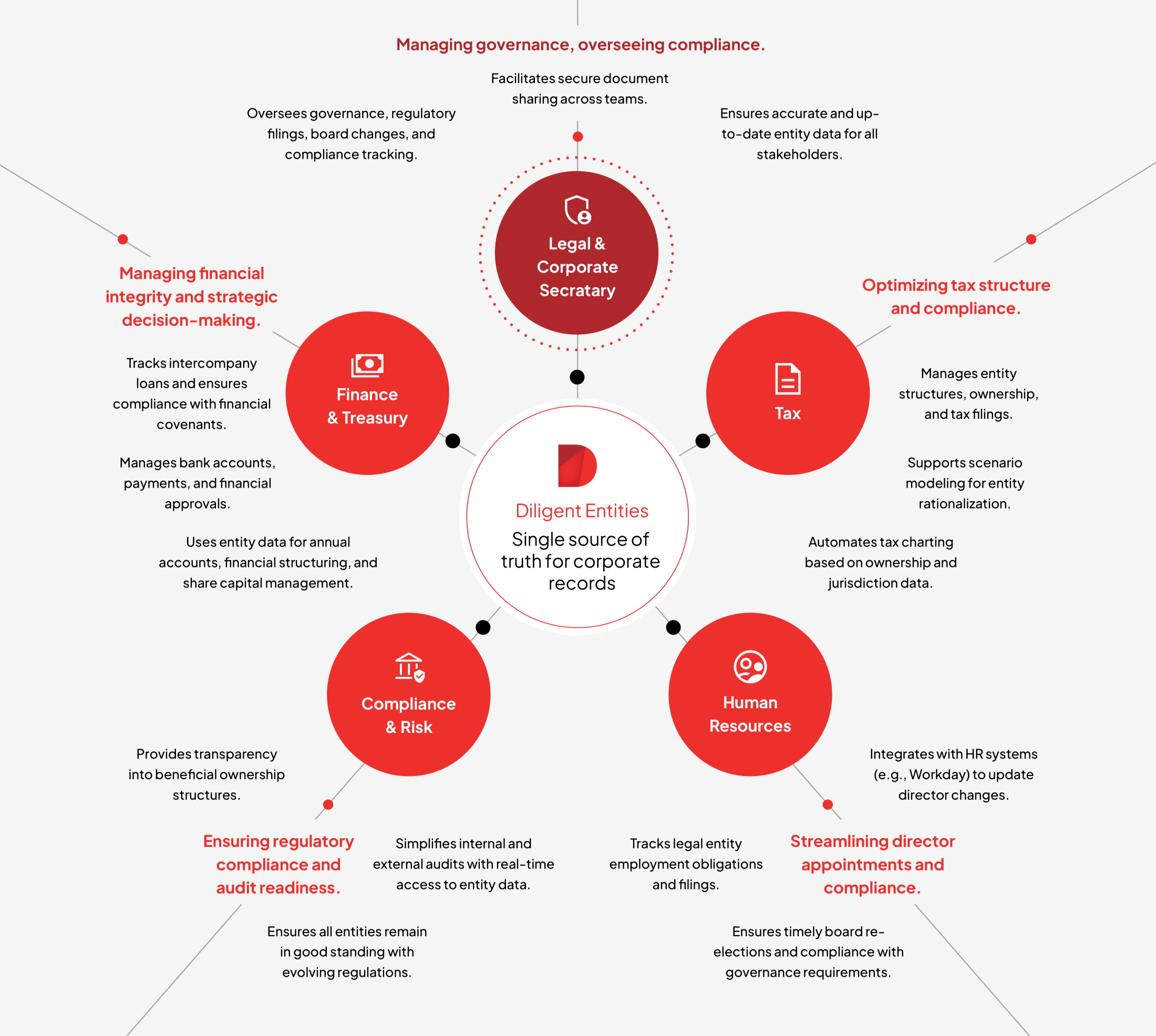
Director appointments come with legal, tax and HR implications, including regulatory filings, employment obligations and signing authorities. Yet, many organizations struggle with outdated or incomplete records.
Legal operations can improve HR collaboration by using AI-powered entity management tools to quickly retrieve director records, automating compliance reminders, and integrating with HR systems like Workday and Active Directory.
Technology spotlight: A helpful AI assistant that allows HR and legal teams to instantly search entity records using natural language queries, eliminating manual lookups.
Risk and audit teams rely on legal data to mitigate compliance exposure and ensure regulatory adherence. Yet, fragmented data storage and manual tracking can increase organizational risk.
Legal operations can enhance risk collaboration by centralizing compliance calendars, implementing secure file-sharing tools, and enhancing UBO (Ultimate Beneficial Ownership) tracking for transparency and governance.
Technology spotlight: Real-time compliance dashboards provide a global view of regulatory obligations, allowing teams to anticipate and address potential risks before they escalate.
True digital collaboration is no longer a luxury — it’s a necessity. Organizations that leverage technology to break down silos between legal, tax, finance, HR, and risk will reduce compliance risks, enhance operational efficiency and drive strategic value. Here’s how to get how to get started on the journey towards this objective:
By embracing technology-driven collaboration, legal operations teams can shift from compliance gatekeepers to strategic business partners, unlocking new opportunities for growth and risk mitigation.
See how legal ops leaders are using AI-powered entity management to unify data, streamline workflows and drive smarter teamwork across tax, HR, finance and risk.

Ready to break down silos and transform collaboration across legal, tax, finance, HR, and risk? Diligent Entities provides a centralized, real-time entity management solution that streamlines compliance, enhances governance, and fosters seamless cross-functional teamwork.
Request a demo today to see how it can elevate your organization’s efficiency and strategic impact.