
In this article

For general counsels and corporate secretaries managing complex board operations, an AI meeting minutes generator promises faster documentation workflows without the manual restructuring that consumes hours after every meeting. But board minutes aren’t ordinary meeting notes. They’re legal records that protect privilege, reflect fiduciary actions and withstand scrutiny in litigation and regulatory review.
The wrong tool creates more risk than it eliminates. Consumer transcription platforms optimize for capturing every word, which is precisely the problem when verbatim records expose preliminary legal analysis, internal disagreements and tentative positions to discovery. A board-grade AI meeting minutes generator does the opposite: It produces selective, structured and reviewable documentation that records what the board decided and why, without over-capturing what was said along the way.
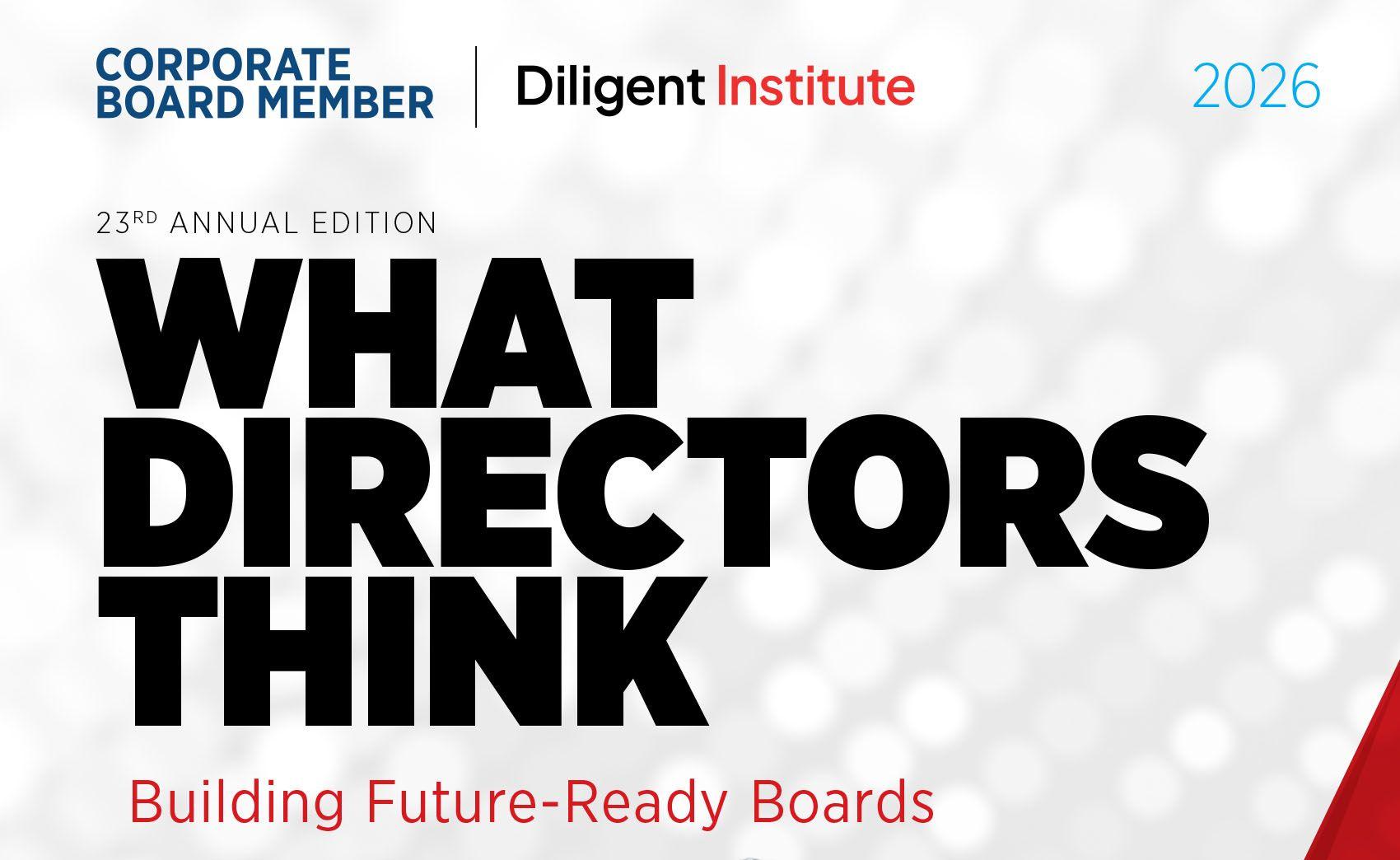
According to What Directors Think 2026 by Diligent Institute and Corporate Board Member, 66% of directors say they’re already using AI for board work, yet only 22% report having AI governance processes in place. For governance teams evaluating minutes tools, that gap is the starting point.
This guide covers what governance teams need to evaluate and implement:
Understanding the technical pipeline helps governance professionals ask better vendor questions and identify where accuracy problems originate. An AI minutes generator processes board discussions through a connected sequence of stages, each introducing a different failure point for reviewers to test.
A practical example: If an audit committee member moves to approve the external auditor engagement and the system attributes that motion to the committee chair instead, the draft should be corrected against the audio before legal review begins. Your workflow should be designed to catch exactly this kind of misattribution.
The distinction between consumer AI transcription and board-grade documentation isn’t a matter of features. It’s a matter of legal defensibility.
State corporate law generally requires boards to maintain records of their proceedings, not transcripts of every exchange. In practice, board meeting minutes should reflect material deliberations, decisions, votes and relied-on information rather than serving as word-for-word records.
Consumer transcription tools optimize for capturing every word. That’s precisely the problem. Verbatim transcripts can expose preliminary views, internal disagreements and detailed legal analysis that opposing parties or regulators may try to use during discovery.
The privilege risk is significant. Recording legal counsel’s advice verbatim increases the risk that privileged analysis is unnecessarily preserved or later contested. The safer approach is documenting that “general counsel presented legal analysis regarding the proposed transaction,” not transcribing what that analysis contained. Consumer tools make this selective documentation difficult by design.
“In our research, we’re seeing a sense of cautious optimism from corporate secretaries and general counsel for using GenAI in their work. They see the benefits of having more efficient processes, but are concerned about the potential for inaccurate results because of GenAI ‘hallucinations’ and about the potential for data privacy risk. The good news is that there are purpose-built GenAI tools for governance professionals that help to greatly reduce both of these risks.”
— Dottie Schindlinger, Executive Director, Diligent Institute
A second scenario illustrates the risk clearly. During a compensation committee meeting, outside counsel advises on disclosure implications for an executive pay decision. A transcript-style record could preserve legal reasoning and tentative director reactions that don’t belong in the formal minutes. A board-ready record should note that the committee received advice, discussed the matter and approved or deferred action.
For public companies, SOX requirements and SEC Rule 10A-3 shape how audit committee oversight, independence and authority are documented. Chronological transcripts don’t organize content in a way that reliably supports those compliance obligations.
General counsel must lead this evaluation, not IT, because the risks are fundamentally legal. Structure your evaluation across five governance-critical domains:
Require current independent security assurance, strong encryption for data at rest and in transit, single sign-on integration and contractual data residency commitments. Ask vendors explicitly whether the system uses customer data to train AI models. Your contract should prohibit model training on company data, prevent unnecessary vendor access to meeting content and block third-party data sharing.
Require session-level disablement of AI recording during privileged discussions, not pause, but verified non-capture. Evaluate whether the vendor offers private deployment options for the most sensitive meetings.
According to What Directors Think 2026, 50% of directors view AI and technology-related regulation as the compliance area most underestimated by boards today. That means AI minute-generation tools should be reviewed as governance systems of record, not convenience software.
Demand mandatory human review workflows with AI outputs clearly marked as drafts. Require original audio retention, immutable audit trails and confidence scoring that flags uncertain speaker attributions. Treat low-confidence outputs as prompts for validation, not as ready-to-file records.
“After board meetings, I want to see the draft minutes as soon as possible in time after meeting, quick turnaround is important.”
— Priya Cherian Huskins, SVP & Partner at Woodruff Sawyer
The system must connect with your board portal, identity provider and document management system. Evaluate calendar integration for automated attendee data and eSignature platform connectivity for formal approval workflows.
Require selective recording for individual agenda items, executive session modes that prevent AI access entirely and role-based access matching your committee structure. If a special committee shifts from routine process updates into transaction negotiations, the chair or corporate secretary should have a defined method to stop capture immediately.
See how AI-powered tools help governance teams produce compliant, defensible board documentation faster.

Implementation requires a phased approach that prioritizes compliance validation over speed of deployment.
Classify meetings before selecting a tool: Not all board discussions carry equal risk. Routine audit committee and governance committee meetings are strong pilot candidates. Executive sessions, M&A deliberations and litigation strategy discussions should be prohibited from AI capture. Create a classification matrix and get board-level sign-off before deployment.
Pilot with committees first: Run the pilot long enough to compare AI-assisted drafts against your existing process across multiple meetings. Define success metrics before the pilot begins: time saved, error rates by type, director comfort levels and quality comparisons against traditional minutes.
Establish a multi-layer review workflow: AI-generated drafts should undergo human review and approval by the board chair, legal counsel and other designated reviewers before being entered into official records. Label all AI outputs: “AI-generated: subject to review. Not an official corporate record.” This is non-negotiable.
Address the chilling effect directly: Detailed AI capture may suppress candid board discussion. Counter this by demonstrating control mechanisms, showing directors they can exclude AI from sensitive discussions and explaining exactly what becomes the official record versus what is discarded.
“Put AI in your risk register. No one’s going to argue with that. Get an AI policy. Board should be asking management for a policy. Adding it to your risk register can get the ball rolling.”
— Richard Barber, CEO at MindTech Group
Update retention schedules and legal holds: Before the first meeting is recorded, integrate AI-generated materials into existing legal hold procedures. AI-generated records are more voluminous, searchable and often stored in vendor-controlled cloud services, expanding your preservation obligations.
Monitor quality continuously: Track error rates per meeting, including misattributions, omissions and hallucinations, alongside human review time trends and director satisfaction scores. Report governance KPIs to the audit or compliance committee on a regular cadence.
The goal isn’t just faster drafting. It’s a repeatable process that preserves defensibility as meeting volume and board complexity increase. According to the APAC Governance Outlook 2026 by Diligent Institute, Governance Institute of Australia and Singapore Institute of Directors, 70% of boards in the region identify AI and technology upskilling as a priority, reinforcing that AI governance readiness is a global imperative, not a regional one.
The documentation challenges outlined above, privilege risk from verbatim capture, manual restructuring of chronological transcripts and inconsistent quality across committee cycles, are exactly the problems that purpose-built governance AI like Diligent is designed to solve.
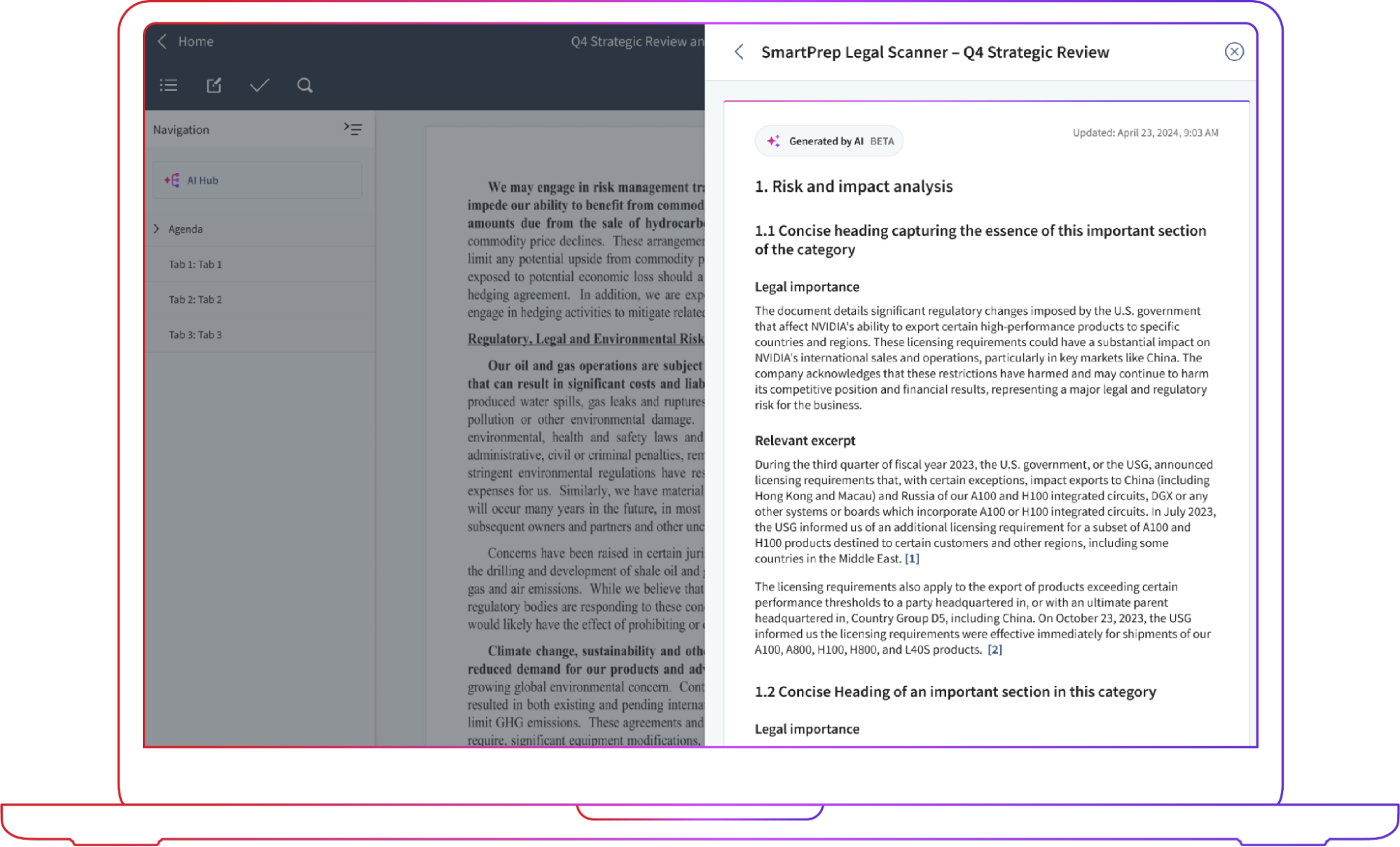
The outcome is documentation workflows that improve efficiency as organizations grow, without lowering the review standards that make board minutes legally defensible. Governance teams that implement purpose-built AI for minutes move from administrative bottleneck to strategic workflow, producing better records in less time while maintaining the compliance controls that matter most.
See how Diligent helps governance teams automate board documentation while maintaining privilege and compliance controls. Schedule a demo.
Not without human review and formal adoption. After review and approval by the board chair, legal counsel and designated reviewers, AI-assisted minutes can serve as official records in the same way traditionally prepared minutes do. The AI draft is a starting point, not a finished product.
It can, especially with consumer platforms that capture everything verbatim. Prohibit AI recording during any discussion where legal counsel provides advice. For board-grade tools, require contractual guarantees limiting data access and evaluate private deployment options for sensitive meetings. The safest approach is verified non-capture during privileged sessions, not just a pause button.
Consent requirements vary by jurisdiction, so organizations should work with counsel to assess applicable federal and state rules before recording any meeting. Best practice regardless of jurisdiction: announce AI use at the start of every board meeting, document consent in the meeting record and establish explicit protocols for remote directors joining from stricter-consent states.
Update retention schedules to address AI drafts specifically and ensure your legal hold procedures cover AI-generated artifacts stored in vendor cloud environments. Many governance teams limit retention of draft artifacts once approved minutes are finalized, subject to legal and records-management requirements.
Policies should address prohibited use cases (executive sessions, privileged discussions), access restrictions, labeling requirements, review mandates and retention integration. Adopt the AI governance policy as a board resolution before the first meeting is recorded. That documents the decision and secures director buy-in to controls simultaneously.
Improve your board documentation workflows today. Schedule a demo to explore how Diligent addresses your governance and compliance needs.