
In this article

A registration statement is one of the most important documents a company files when preparing to go public. Without the correct form on file with the SEC, you cannot legally offer securities to investors. These filings are technically demanding and subject to rigorous review. But they offer transparency and legal compliance, providing investors with insight they need to evaluate your business.
For general counsel and CFOs leading the IPO process, the registration statement is where governance readiness meets regulatory scrutiny. Every disclosure gap, every unresolved comment letter and every inconsistency between your prospectus and your financials becomes visible to the SEC and, eventually, to the market.
The regulatory landscape heading into 2026 offers both opportunity and complexity. The SEC has implemented reforms to streamline capital formation, including permanent confidential review accommodations and a new mandatory arbitration policy. At the same time, disclosure expectations around cybersecurity, AI governance and climate risk continue to evolve.
This guide covers:
A registration statement under the Securities Act of 1933 is a document filed with the Securities and Exchange Commission (SEC) to outline information related to a public securities offering. This includes financial data, company objectives and risks. It ensures complete transparency and compliance with securities laws.
A registration statement becomes "effective" when the SEC completes its review and approves any required amendments. Once effective, the company can begin selling securities to raise capital from public investors.
Each registration statement form serves a different purpose. Understanding which form applies to your situation is critical for compliance, strategic positioning and efficient use of resources during the IPO preparation period.
An S-1 registration statement is filed when a business conducts its initial public offering (IPO). It includes information related to:
Filing an S-1 ensures potential investors have all the relevant information they need to make an informed decision. The SEC reviews the S-1 thoroughly, typically providing initial comment letters within 30 days of submission.
A Form S-3 is used by established public companies for additional capital raises. Eligibility requires a public float of at least $75 million, timely Exchange Act reporting for 12+ months and full regulatory compliance. S-3 provides flexibility through shelf registrations, valid for three years.
In March 2026, the SEC clarified that issuers filing at-the-market (ATM) prospectus supplements under General Instruction I.B.1 can "lock in" registered amounts for the life of that supplement, eliminating the prior requirement to recalculate non-affiliate float at each annual report filing.
An S-4 covers securities issued in business combinations, mergers, acquisitions or exchange offers. It requires detailed disclosure on transaction structure, all parties involved, securities exchanged, financial impact including pro forma statements and regulatory approvals required. The S-4 ensures shareholders receive the information they need for informed decision-making about complex corporate transactions.
Filed when a company offers employees stock options as part of a benefits package. Less comprehensive than other forms because recipients already have knowledge of the company.
Allows existing shareholders, including early investors, PIPE investors and employees, to resell securities acquired through private transactions. Provides liquidity and enables public trading.
Filed by international companies offering securities to U.S. investors. These forms include additional disclosures about foreign regulatory environments and accounting standards, and may use U.S. GAAP, IFRS or home-country standards with a U.S. GAAP reconciliation:
Foreign private issuers should note that Section 16 reporting obligations now apply following the SEC's December 2025 rule changes. Directors and officers of FPIs with Exchange Act registration statements effective after December 18, 2025, must file beneficial ownership reports on Forms 3, 4 and 5.
Registration statements must address contemporary risks alongside traditional disclosure requirements. For general counsel drafting an S-1, the challenge is making each section company-specific rather than relying on boilerplate language that invites SEC scrutiny.
Prospectus: The investor-facing document containing offering details, terms and company information. This section now routinely addresses cybersecurity incident history, AI-related business impacts and supply chain risk exposure.
Exhibits and legal documents: Material contracts and supporting documents. Included in all forms except S-8.
Financial statements: Audited financials meeting SEC standards, with enhanced focus on revenue recognition, internal controls and technology-related expenditures. Included in all forms except S-8.
Risk factors: Comprehensive disclosure of business, financial and operational risks. The SEC has intensified its push for specificity, rejecting generic disclosures that could apply to any company. Pre-IPO companies should tailor each risk factor to their specific circumstances, quantify potential impacts where possible and explain mitigation strategies.
Management's Discussion and Analysis (MD&A): Management's analysis of finances and operations. The SEC has increased scrutiny on MD&A quality, requiring more specific, forward-looking analysis. All forms except S-8.
Legal proceedings: Details any material legal disputes. Can appear in any form if relevant.
Cybersecurity: The SEC's rules, effective December 2023, require reporting material incidents on Form 8-K within four business days. Registration statements must demonstrate board-level cybersecurity oversight and incident response protocols.
Climate risk: The SEC ended its defense of federal climate rules in March 2025 and asked the Eighth Circuit to decide the case. The rules are unlikely to take effect under the current administration. However, California's SB 253 requires businesses exceeding $1 billion in revenue to disclose Scope 1 and 2 emissions starting in 2026.
New York enacted emissions reporting requirements in December 2025. Internationally, nearly 40 jurisdictions have adopted ISSB-aligned frameworks. Institutional investors continue to expect climate disclosures regardless of federal requirements, particularly in sectors with material environmental exposure.
AI and technology: AI and cybersecurity have displaced cryptocurrency as the SEC's dominant examination focus in 2026. The Investor Advisory Committee recommended formal AI disclosure guidance, including requirements to define AI terminology, disclose board oversight mechanisms and report on AI's impact on operations.
"Companies have to prepare for [the SEC's cybersecurity disclosure rules] before they're public. Directors need to be able to track the company's cyber compliance," says John Egan, Partner at Goodwin Law.
The comment letter exchange is one of the most resource-intensive phases of the registration process and is frequently underestimated by first-time filers. It often spans multiple rounds, each requiring coordination between general counsel, outside securities lawyers, auditors and executive management. Delays in any response push back the entire IPO timeline.
Comment letters frequently target risk factor specificity, revenue recognition policies, MD&A depth, cybersecurity and AI disclosure adequacy and inconsistencies between prospectus language and financials. The SEC has also increased scrutiny of boilerplate risk language, expecting company-specific disclosure rather than generic industry risks.
Four strategies to manage the process effectively:
Companies that build these workflows before filing typically resolve SEC comments faster, with fewer rounds of back-and-forth and less disruption to the broader IPO timeline.
The registration process requires coordination across legal, finance and governance functions. Each step builds on the previous one, and delays cascade through the entire timeline.
The general counsel drafts the registration statement, including the prospectus, financial statements, MD&A, legal documents and risk factors. The corporate secretary organizes internal reviews and approvals with relevant stakeholders, including board authorization and director questionnaires.
This phase is lengthy and labor-intensive. Allocate significant time to ensure the first draft is thorough, as incomplete filings lead to more rounds of SEC comments. According to the Transaction Readiness Report by Diligent Institute and its research partners Wilson Sonsini, NetSuite, CFO Alliance and the CFO Leadership Council, companies rate transaction readiness confidence at just 5.7 out of 10, and 56% cite limited resources as their top challenge.
"We were going to get to the point where we were operating like a public company before we were a public company. Doing earnings calls, having the SOX compliance processes and so on," says Don Song, Senior Corporate Counsel at Klaviyo.
Submit your draft under the SEC's expanded confidential review accommodations. This allows you to receive SEC feedback and resolve comment letters before publicly committing to an offering timeline, protecting competitive information during the review process.
Critical timeline requirements:
Building a confidential filing strategy early gives your legal team room to iterate on disclosures without market pressure, and it preserves optionality if you need to adjust your offering timeline based on investor feedback or shifting conditions.
The SEC reviews the registration statement to ensure it meets compliance requirements. The review typically takes around 30 days but can be longer. The SEC may request additional information, and it is essential to respond promptly. Responding within 10 business days maintains momentum and signals seriousness to the review team.
After SEC approval, any amendments and updates must also be filed and comply with regulations. Pre-IPO companies should update registration statements whenever material changes occur to business operations, financial performance or market conditions.
Once publicly filed, begin investor marketing activities. Coordinate roadshows, investor meetings and analyst presentations while maintaining compliance with securities laws regarding forward-looking statements. Work with underwriters to determine final pricing based on market conditions and investor demand, then request SEC effectiveness to complete the offering.
"Make sure you're behaving like a public company before you're a public company," says Bonnie Hyun, U.S. Head of Capital Markets at NYSE.
Several SEC policy shifts and legislative developments in 2025 and 2026 have reshaped how companies approach registration statements. General counsel and CFOs should factor these changes into their filing strategy and timeline planning.
The SEC expanded non-public submission availability to boost U.S. capital formation. These accommodations, introduced in 2025, are now permanent features of the registration framework rather than temporary accommodations.
Key provisions include:
In practice, this gives general counsel managing IPO timelines a measurable edge. Confidential review lets your team resolve SEC comments and refine disclosures before competitors, customers or the press can see your filing. This is especially valuable in volatile markets where public commitment to an offering timeline carries reputational risk if conditions shift.
In September 2025, the SEC clarified that mandatory arbitration provisions in a company's governing documents will no longer affect decisions on whether to accelerate the effectiveness of a registration statement. Previously, the SEC's unwritten practice effectively blocked companies from including these clauses.
Under the new policy, SEC staff will focus solely on the adequacy of disclosures, including proper disclosure of any arbitration provision itself. SEC Chair Paul Atkins described the change as a step toward making IPOs more attractive to companies.
Companies considering mandatory arbitration should weigh several factors. While the SEC has removed the federal barrier, Delaware recently amended its General Corporation Law to prohibit these provisions, and their enforceability under the Federal Arbitration Act remains untested in this context. The practical impact will depend on how courts and state legislatures respond in the coming years.
The SEC's Spring 2025 regulatory agenda includes two proposals that could meaningfully reduce registration burdens for pre-IPO companies:
Separately, the House passed the INVEST Act in early 2026, which proposes reducing EGC registration requirements from three years to two years of audited financial statements and lowering the well-known seasoned issuer (WKSI) public float threshold from $700 million to $400 million.
If enacted, these changes would streamline shelf access for roughly 400 additional public companies. Companies preparing filings should monitor both the SEC rulemaking process and the legislative path of the INVEST Act.
See how growth-stage companies are building governance infrastructure that accelerates IPO timelines.

Registration statement preparation exposes every weakness in a company's governance infrastructure. Teams coordinating across legal, finance, audit and the board need to compile materials quickly, maintain version control across multiple review cycles and produce audit trails that demonstrate oversight maturity to the SEC and investors alike.
Diligent’s Governance technology addresses these operational challenges directly:
Smart Builder automates creation and assembly of meeting materials from integrated systems of record. For general counsel managing comment letters, this means faster board approvals for amended disclosures and real-time visibility into document status across the review team.
Diligent Boards supports IPO readiness through secure document sharing with configurable permissions, automated task tracking, integrated messaging and comprehensive audit trails. These trails strengthen disclosure credibility during SEC review by documenting consistent board oversight.
Smart Risk Scanner identifies compliance gaps and legal red flags in board materials before they reach the SEC. Embedded risk dashboards and automated committee reporting surface relevant issues in board-ready formats.
For pre-IPO companies navigating expanding disclosure requirements around cybersecurity, AI and operational risk, this capability ensures that risk committees can review and approve disclosures with confidence rather than scrambling to address gaps during SEC review.
For companies managing the volume of documentation required during IPO preparation, Diligent Data Rooms provide secure virtual environments integrated with the governance platform. Teams can manage due diligence materials, coordinate with underwriters and maintain organized records that satisfy both SEC review and investor information requests.
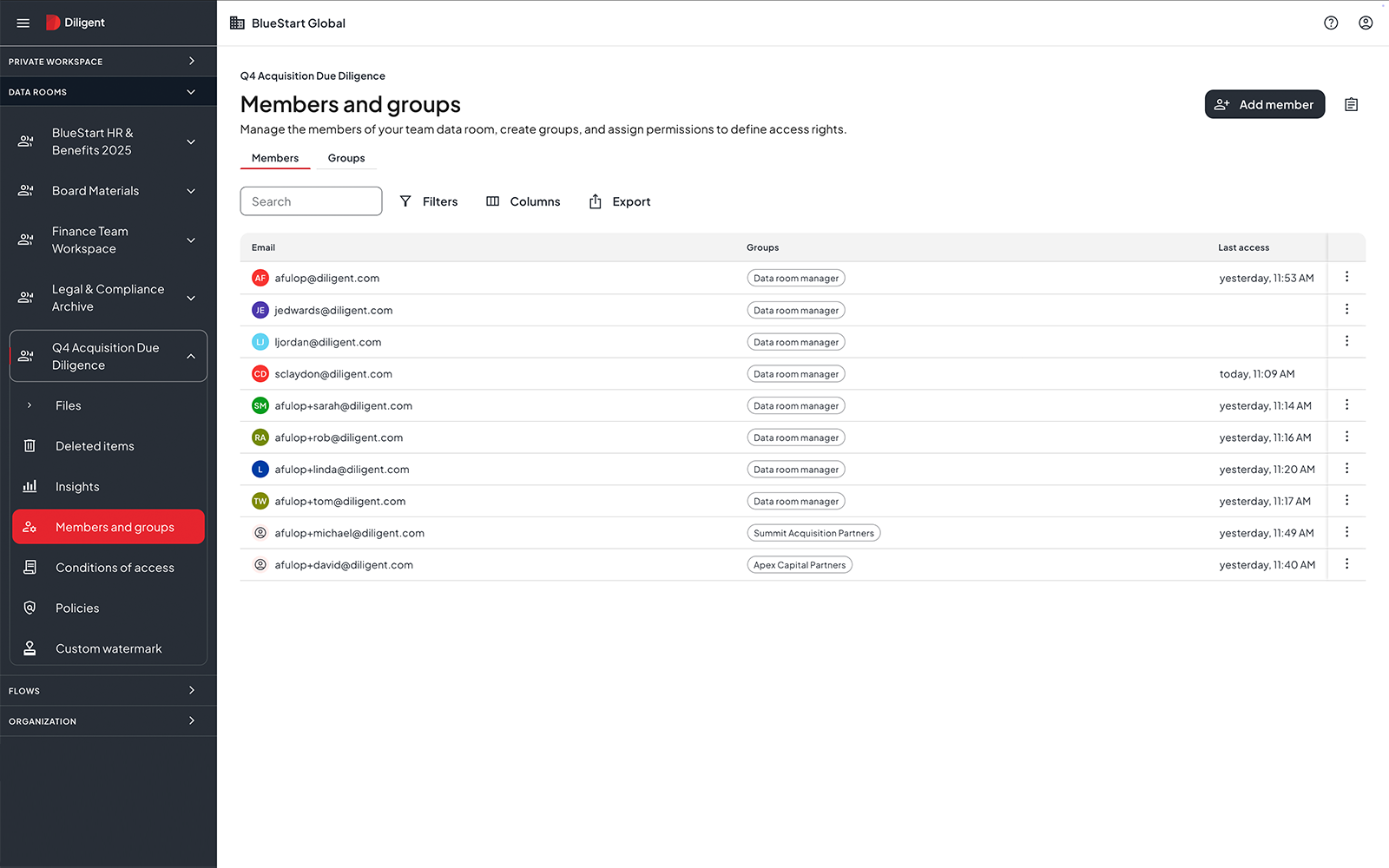
The integration with the broader governance platform means that documents prepared for board review flow directly into transaction workspaces without manual duplication.
Registration statements require meticulous preparation, but companies leveraging professional governance platforms complete the process more efficiently while reducing regulatory risk.
Ready to accelerate your IPO preparation? Schedule a demo to see how Diligent helps growth-stage companies achieve regulatory excellence while maintaining competitive market timing.
Form S-1 has no statutory expiration date but requires updates whenever material changes occur to the business. Form S-3 remains valid for three years after SEC approval, and the SEC's March 2026 guidance now allows issuers to lock in ATM prospectus supplement amounts without recalculating at each annual report filing.
The board of directors, legal counsel, financial officers, executive management and external auditors must all review and approve a registration statement before SEC filing. Each stakeholder validates a different dimension of the disclosure, from legal compliance and financial accuracy to strategic positioning and internal control assessments.
Key developments include permanent confidential review accommodations for all offering types, the mandatory arbitration policy change and heightened scrutiny of AI and cybersecurity disclosures. The SEC's 2026 examination priorities also flag AI governance and operational resilience as primary focus areas for registrants.
It allows companies to receive SEC feedback and resolve comment letters before publicly committing to an offering timeline. This protects competitive information, gives issuers flexibility to time their public filing with favorable market conditions and reduces the risk of negative publicity from a drawn-out public review process. Issuers must file publicly at least 15 days before any roadshow.
Update whenever material changes occur to business operations, financial performance or market conditions. Regular updates ensure accuracy and transparency for investor decision-making, and they reduce the risk of SEC comments flagging stale disclosures during review.
Start building transaction-ready governance today. Book a demo to see how Diligent streamlines registration statement preparation.